We get a lot of questions about what the bees do when winter comes…
Bees are very good at heat generation and teamwork. What happens when the temperature drops below 5C, is that the colony starts to group together around the queen.
The colder it gets, the tighter the “cluster” that the bees create. Bees take turns on the outside of the cluster, and the cluster moves around the hive over the honey stores. Bit, by bit, the worker bees consume the honey and feed the queen. This keeps their energy and ability to generate heat up. With increased cold, there is increased use of honey stores – so a very cold or long winter can cause the hive to starve out.
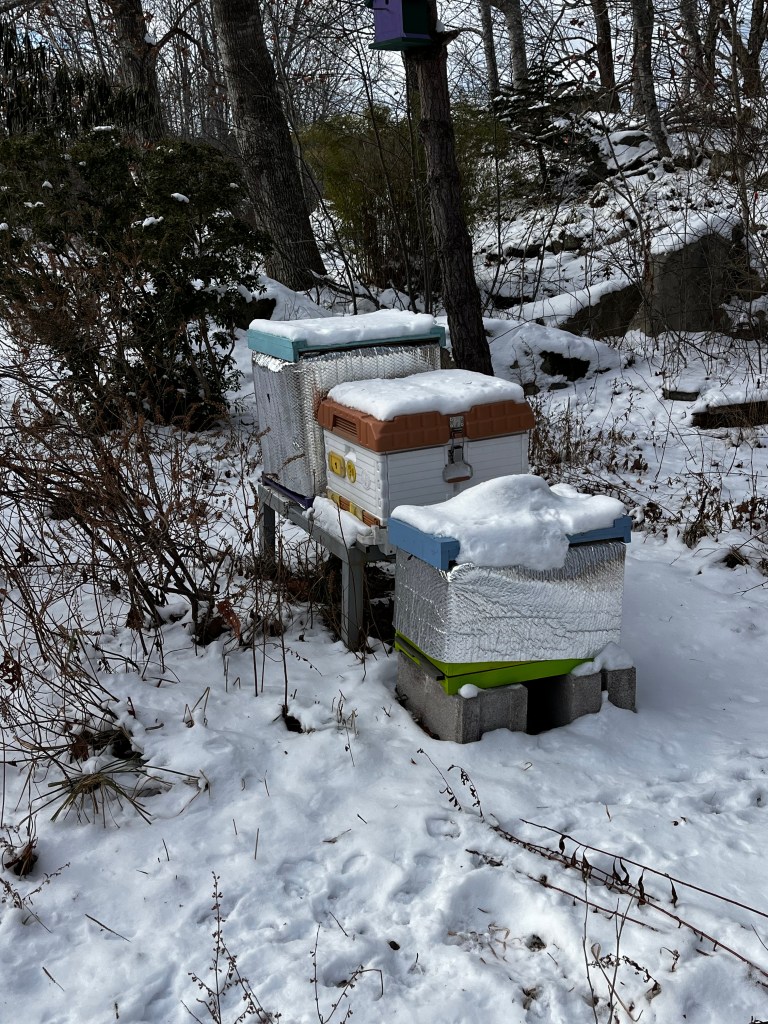
Ready for winter: The centre hive has built-in insulation,
In a managed hive, it is critical that before the cold comes, we ensure that the bees have adequate “stores” for them make it through to the first food available in the spring. To help reduce the amount of stores they go through, most beekeepers also apply insulation or wind protection – but at the same time, it is critical that there is enough ventilation to allow the bees to breathe fresh air and remove humidity from the hive.
Most colonies that fail in winter die off either due to the impacts of varroa mite infestation, or from starvation if not enough stores were not present in the hive. Condensing humidity can also cause serious problems as they condensation drips off the roof of the hive, and the cold water penetrates the cluster making it harder to generate heat.
It is not uncommon to lose a colony over the winter, but with the right preparations (and a bit of luck) we do hope to keep them all and get them ready for another busy season of honey production in early spring.
 Tiddley Bee Honey Company